Rack System — Serving Greater Houston
Drive-In Pallet Rack in Greater Houston
Maximum-density LIFO storage — forklift drives into the rack, pallets rest on continuous side rails, 2 to 10+ deep.
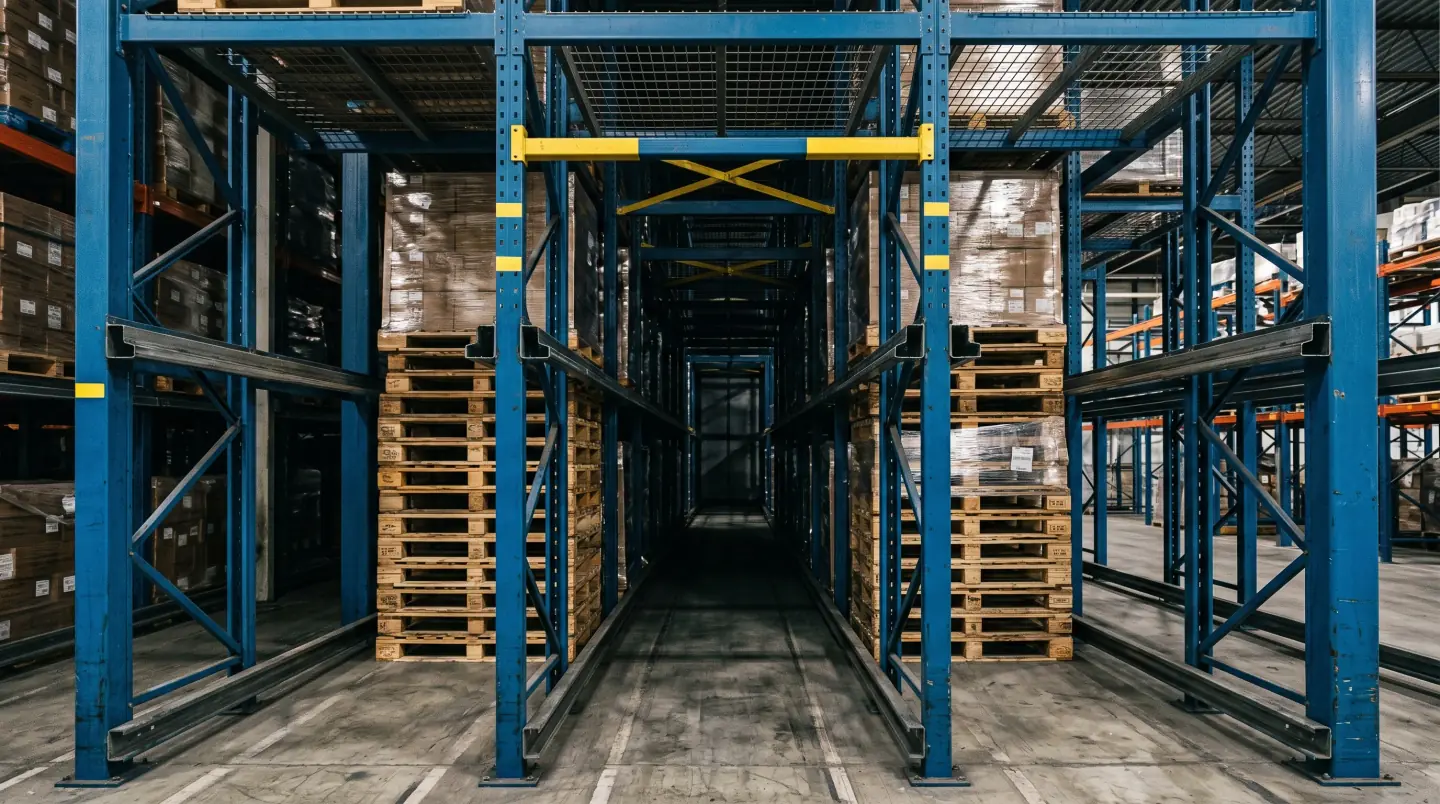
Drive-In Pallet Rack supplied and installed across Greater Houston. Free, no-obligation quotes.
Overview
Drive-In Pallet Rack in Greater Houston
Drive-in pallet rack is the highest-density pallet storage system outside of full automation. The forklift drives into the rack structure between heavy structural columns, traveling on floor-level wheel paths, and places pallets on continuous side rails that run the full depth of the lane. Pallets are stored 2 to 10+ deep, stacked 3 to 5 high, with every cubic foot inside the rack footprint converted to storage. The tradeoff is real — drive-in runs LIFO only, rack-damage exposure is the highest of any rack type because forklifts physically enter the structure, and every bay typically holds a single SKU. But for Greater Houston operators with homogeneous, bulk, lower-selectivity inventory — especially cold storage freezers and seasonal peak staging — drive-in delivers the lowest capital cost per pallet position of any serious rack system. Greater Houston Pallet Racking engineers drive-in installs for the site’s ASCE 7 wind load and anchors to the locally adopted International Codes (IBC-based) and RMI ANSI MH16.1-2023, with column-protector packages specified on every install to keep rack repair costs controllable over time.
- Lowest capital cost per pallet position of any major rack type
- Maximum cube utilization — critical in cold storage and high-rent markets
- Simple construction — few moving parts, low ongoing maintenance
- Scales with inventory seasonality — great for peak-period bulk storage
What you get
Product features
- Lane depths from 2 to 10+ pallets, heights typically 3–5 pallets high
- Heavy structural steel columns — all load transfers through uprights
- Continuous side rails running full lane depth (no beams to bow or fail)
- Column-protector packages standard on every Greater Houston installation
- Drive-through configurations engineered for limited-FIFO operations
- Compatible with reach, narrow-aisle, and sit-down forklift fleets
- Engineered to locally adopted International Codes (IBC-based) and RMI ANSI MH16.1-2023
Spec sheet
Drive-In Pallet Rack at a glance
Specifications
Heavy structural uprights
Vertical columns are set on a deep grid — wider than selective rack — and every load is transferred directly to these columns. There are no beams; uprights carry all vertical and lateral loads.
Continuous side rails
Instead of beams spanning front-to-back, drive-in uses horizontal side rails that run the full lane depth along the inside of each column line. Pallets rest on these rails at every level.
Forklift enters the rack
A forklift drives directly into the lane, between column lines, to place or retrieve a pallet. Loading starts at the back of the lane and fills forward; retrieval picks from the front.
Fit check
Is it right for you?
Choose it when
- You need maximum density and LIFO rotation is acceptable
- A bay will hold a single SKU (or very few SKUs) at a time
- Cold storage or freezer operations where cube utilization is the dominant cost lever
- Seasonal or peak-period inventory staging where selectivity matters less than capacity
- You already operate reach trucks or narrow-aisle fleet, or will invest to run them
Consider alternatives when
- You need FIFO — go with pallet flow instead
- SKU count per bay is high — selective is the right call
- Your operation cannot tolerate rack-damage repair cycles — consider pushback
- Your forklift fleet is all counterbalance and you do not want to change that
Where we install it
Greater Houston use cases
Cold storage freezer — I-10 West distribution corridor, Greater Houston food and beverage production, Harris County
Greater Houston cold chain operators use drive-in for bulk homogeneous SKU freezer storage where every square foot of floor space costs significant refrigeration energy. Drive-in compresses footprint harder than pushback and pays back in utility bills within the first few years.
Tire & rubber distribution — Pasadena area, Harris County
Regional distributors for Michelin, Goodyear, and major tire retailers run drive-in for identical-SKU bulk tire storage. A bay holding 40 identical passenger-car tire SKU cases is the textbook drive-in use case.
Paper & pulp — Harris County, Pasadena area
Paper roll distribution operations use drive-in for bulk roll stock and corrugated bundles where SKUs are homogeneous and pick frequency per bay is low.
Seasonal retailer DC — I-10 West logistics corridor, Grand Parkway corridor
Home Depot and Lowe's regional DC operations use drive-in for seasonal SKU peak staging — holiday product, patio furniture in spring, heating equipment in fall — where a SKU is in and out in a defined window and density beats selectivity.
Beverage bulk pre-ship — Houston, Brookshire
Regional beverage distributor pre-shipment bulk staging uses drive-in in the zones where pallet rotation is controlled by shipping lane rather than FIFO code-date logic — letting the DC extract maximum cube from the footprint.
Straight answers
Drive-In Pallet Rack questions
1 How is drive-in different from drive-through?
Drive-in has a single aisle where forklifts enter and exit, which forces LIFO rotation. Drive-through has aisles on both ends of every lane, letting forklifts load from one side and pick from the other to achieve limited FIFO. Drive-through costs more (extra aisle space, more columns) but gives rotation flexibility — uncommon but used in some Greater Houston food and pharma applications.
2 What kind of forklift do I need for drive-in?
Most Greater Houston drive-in installs run reach trucks or narrow-aisle trucks because the forklift has to maneuver between columns inside the rack. Sit-down counterbalance can work in wider-aisle designs but gives up some density. If your fleet is all counterbalance and you want density without fleet changes, pushback is usually the better choice.
3 Why is rack damage such a concern with drive-in?
Because forklifts physically enter the rack structure, every in-and-out cycle is a potential impact on a column or side rail. A distracted operator clipping an upright can total a column section and bring down pallets. Every serious Greater Houston drive-in install includes column-protector guards on the full column base, and most operations budget ongoing rack repair as a line item.
4 How does drive-in compare to pushback?
Both are LIFO and both gain density over selective. Drive-in goes deeper (2–10+ vs. 2–6 pallets) and costs less per position, but forklifts enter the rack so damage exposure is higher and you typically need reach or narrow-aisle trucks. Pushback keeps forklifts in the aisle, works with standard counterbalance, but costs more and caps out at about 6 deep. The tradeoff is density and cost vs. damage control and fleet flexibility.
5 What SKU mix makes drive-in the right answer?
Drive-in pays back when a single bay holds a single SKU (or very few SKUs) for extended periods. If you have 20 pallets of one SKU sitting for 2 to 8 weeks before shipping — perfect fit. If every bay needs to hold 3–5 unique SKUs and inventory cycles daily, drive-in is the wrong choice and selective or pushback wins.
6 Can drive-in be used in a freezer?
Yes — and freezers are one of the most common drive-in applications in Greater Houston cold-storage corridor (I-10 West distribution corridor, Greater Houston food and beverage production, Harris County). Drive-in lets the operator compress the refrigerated footprint, which directly cuts energy cost because refrigeration load scales with cubic footage. That density-to-energy math is often what makes drive-in pencil out in cold storage even when pushback would work operationally.
7 How much does drive-in racking cost?
Drive-in rack materials run roughly $60–$80 per pallet position — close to selective — but installation runs heavier (up to 35% of material cost) because of the rail-and-upright structure forklifts drive through. It is usually the cheapest path to high-density storage for few-SKU, high-volume freight. Greater Houston Pallet Racking quotes drive-in after verifying your pallet and forklift specs.
More from us
Other rack systems
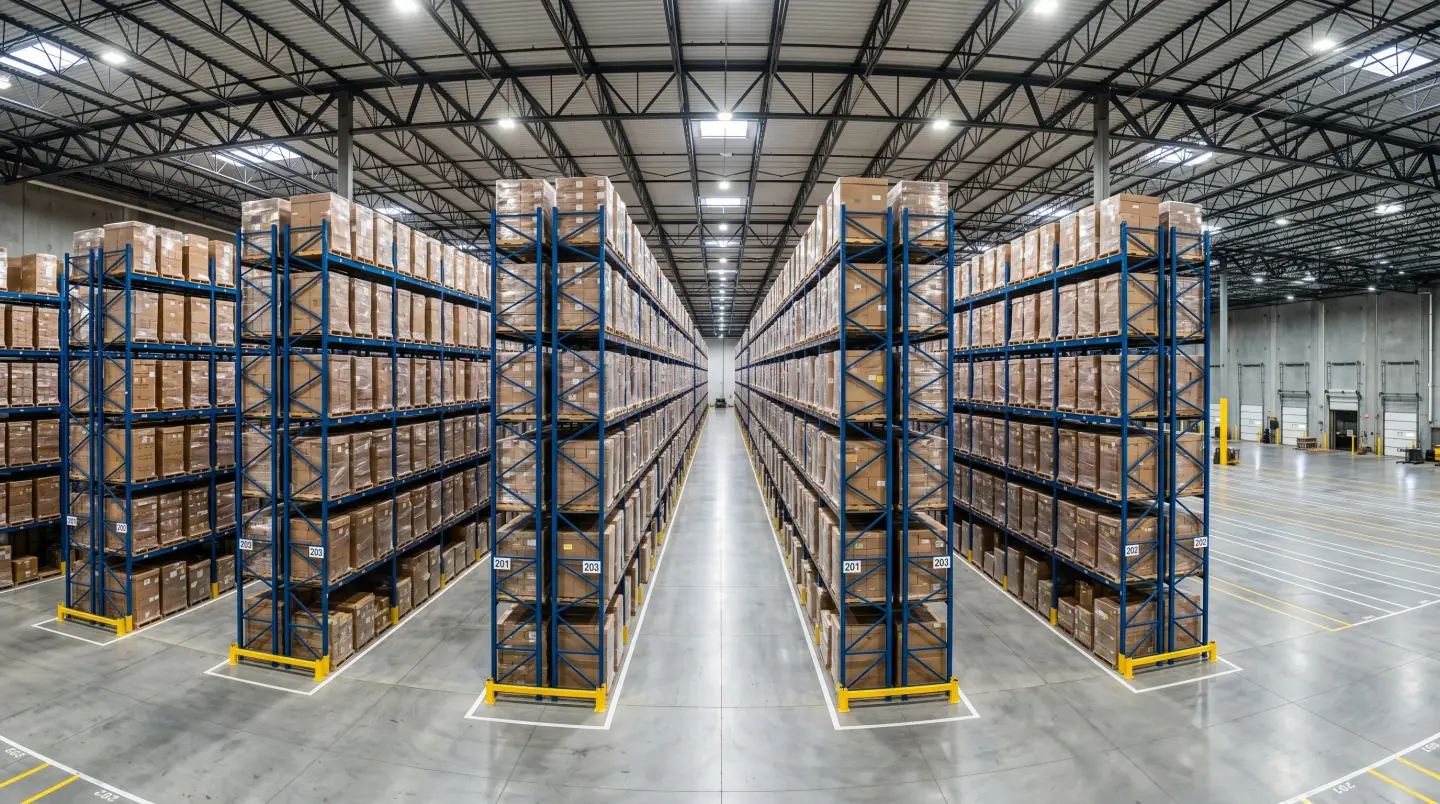
Pallet Racking & Shelving
Learn More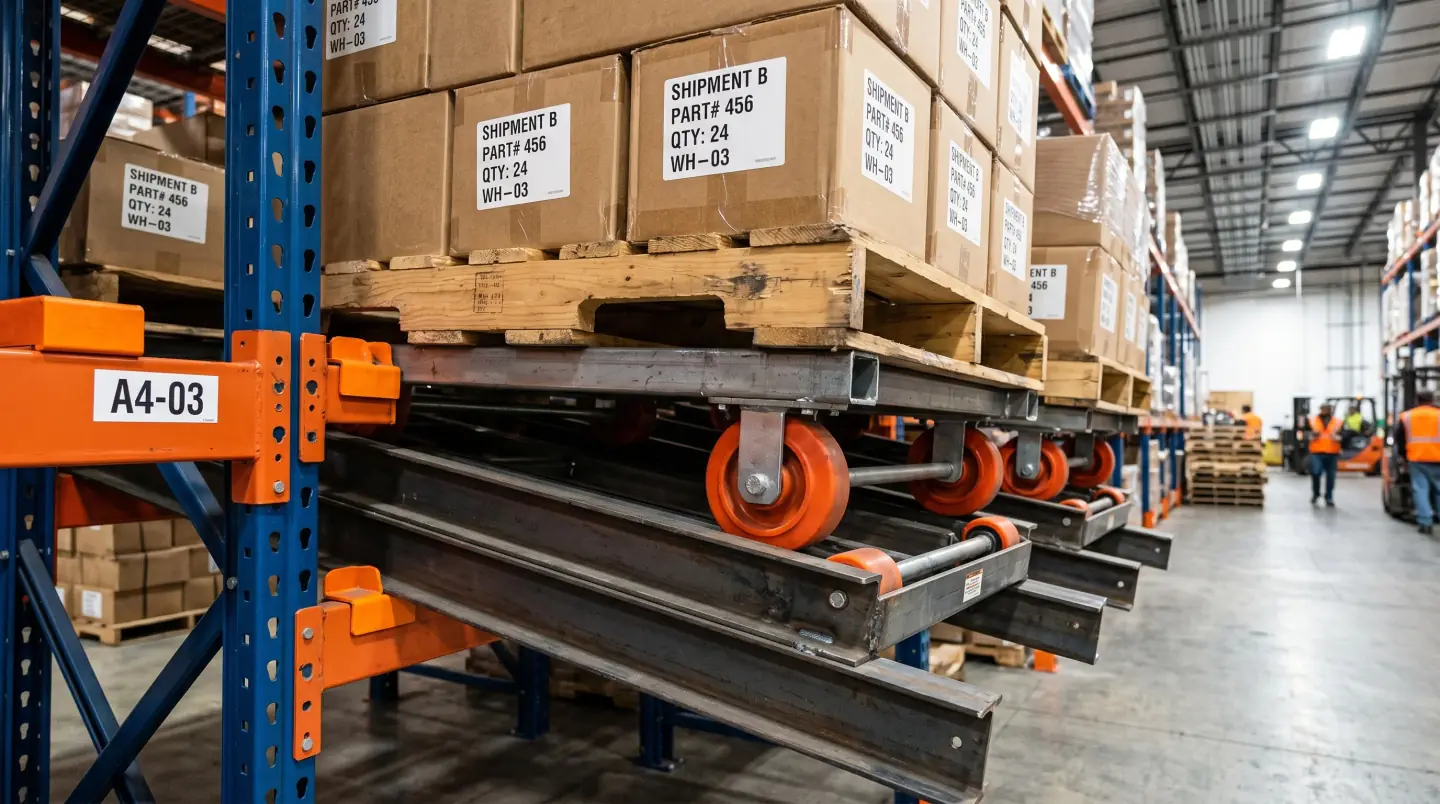
Pushback Rack
Learn More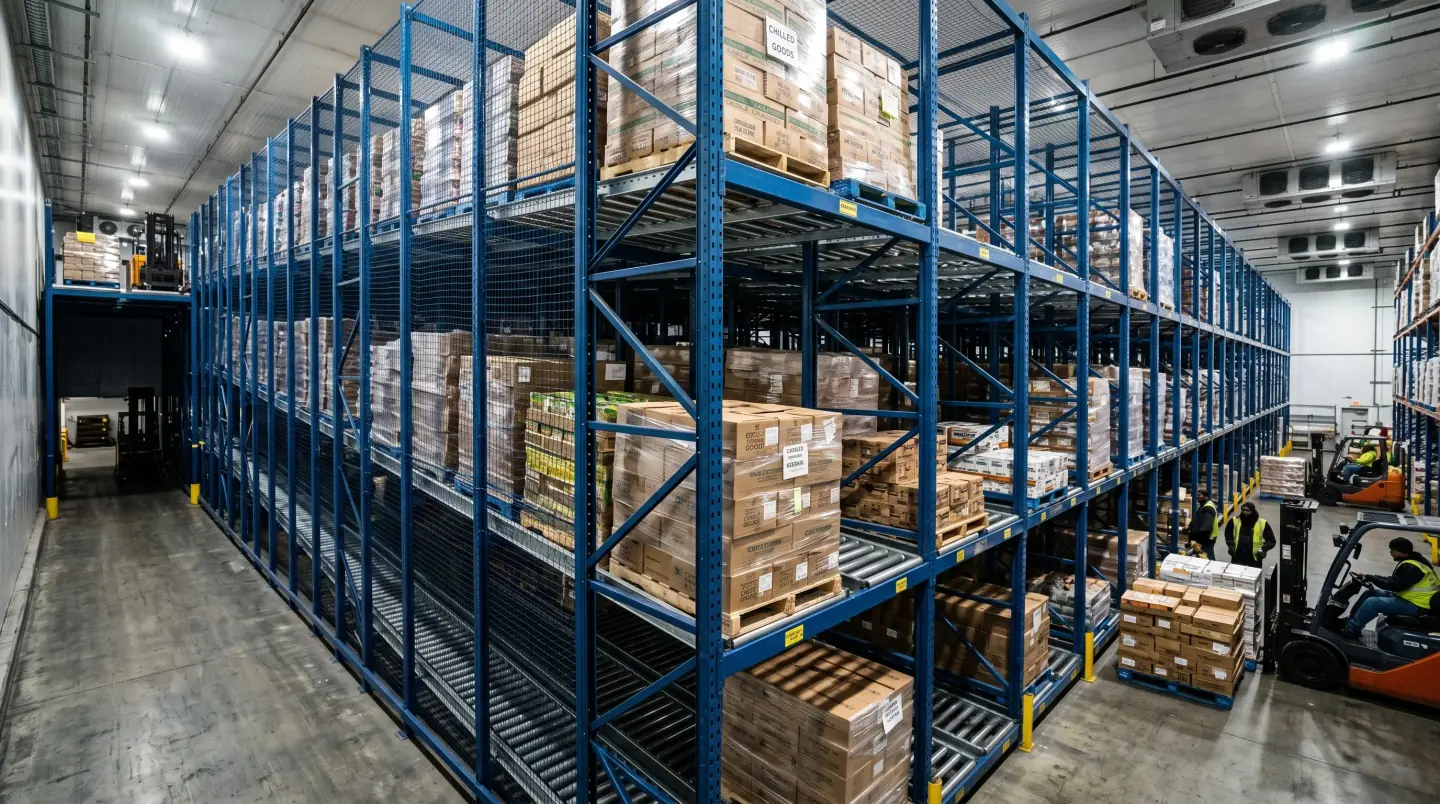
Pallet Flow Rack
Learn More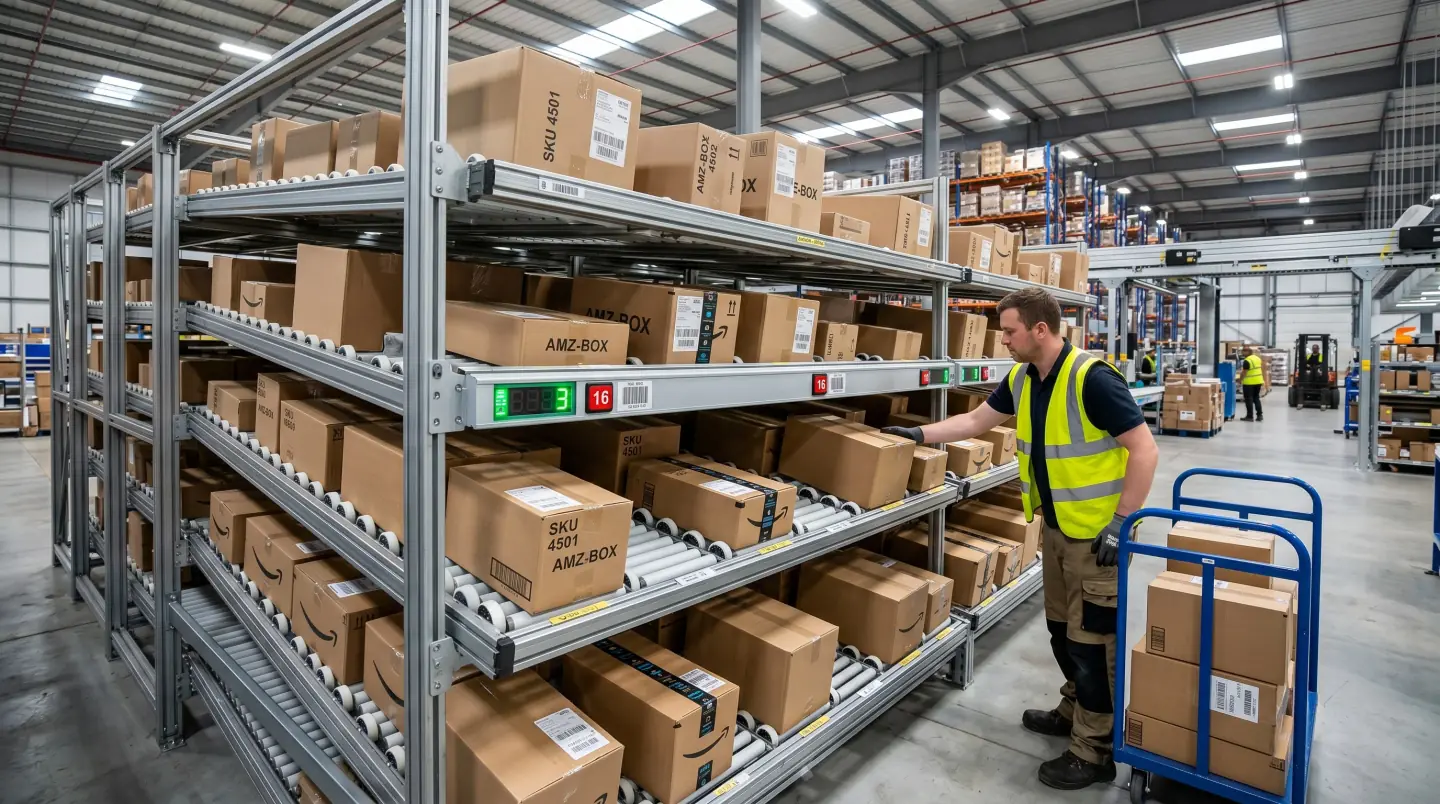
Carton Flow Rack
Learn MoreWhere we work
Drive-In Pallet Rack across Greater Houston
We deliver drive-in pallet rack to warehouses across the Greater Houston metro — Harris, Fort Bend, Montgomery, Waller, Chambers and Brazoria counties. Pick your area for local permitting details, typical ceiling heights, and the industries we work with there.
- Houston, TX Drive-In Pallet Rack
- Pasadena, TX Drive-In Pallet Rack
- Deer Park, TX Drive-In Pallet Rack
- La Porte, TX Drive-In Pallet Rack
- Baytown, TX Drive-In Pallet Rack
- Katy, TX Drive-In Pallet Rack
- Brookshire, TX Drive-In Pallet Rack
- Cypress, TX Drive-In Pallet Rack
- Tomball, TX Drive-In Pallet Rack
- Spring, TX Drive-In Pallet Rack
- Conroe, TX Drive-In Pallet Rack
- Humble, TX Drive-In Pallet Rack
- Stafford, TX Drive-In Pallet Rack
- Rosenberg, TX Drive-In Pallet Rack
- Pearland, TX Drive-In Pallet Rack